
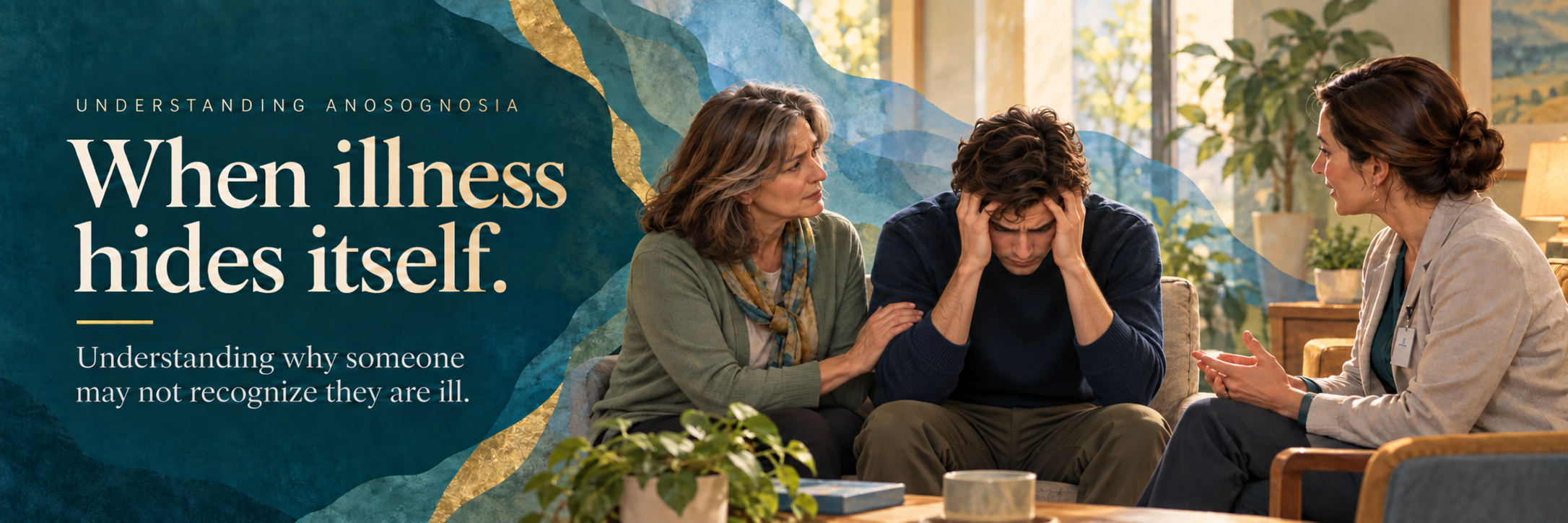
Anosognosia: the reason they can’t see they’re ill
Anosognosia (ah-no-sog-NO-zee-ah) is the neurological inability to recognize one’s own illness. It is a symptom of the brain disorder itself — not denial, not stubbornness, and not a choice.
In schizophrenia, it is common: a large share of people with the illness genuinely believe nothing is wrong with them. You cannot argue someone out of it, and they cannot “just decide” to get help — because to them, there is nothing to get help for.
Why it matters
Anosognosia is the single biggest reason people with severe mental illness don’t receive treatment. It is also the reason the public’s most common explanation — “they just don’t want help” — is wrong, and the reason laws built around waiting for someone to ask for help will always fail these families.
Many doctors still don’t recognize it. Much of the public has never heard of it. Changing that is one of the main things we advocate for.
What it means for families
If your loved one refuses treatment and insists nothing is wrong, it may not be defiance. It may be the illness talking. Understanding anosognosia doesn’t make the situation less painful — but it changes what you ask for: not persuasion, but a law and a system that can reach someone who cannot reach for help themselves.
What it means for the law
Ontario’s Mental Health Act must account for anosognosia. Criteria written as if every patient can recognize their illness will keep missing the very people most in need of care. That is why we are calling for a separate section of the Act for schizophrenia, schizoaffective disorder, and bipolar psychosis — read our position.
Further reading
- “The Patient Declined” (Lancet Psychiatry, 2026) — A recovered patient’s first-person account of anosognosia: why “the patient declined” can mean the illness refused, not the person.
- “Anosognosia in Schizophrenia: Hidden in Plain Sight” (2014) — the clinical review grounding poor insight as a brain-based feature of schizophrenia. (open access)